

The history of African fintech and what it tells us
Fintech in Africa has been described as one of the most explosive fields of the past decade. Venture capitalists, traditional finance firms, governments, and even the average smartphone user each had a hand in the massive acceleration of its growth.
Fintech on the continent came to its own around 20 years ago, growing to 450 companies by 2020. Come 2024 the number had nearly tripled to 1,263 fintechs, according to the European Investment Bank. At the heart of this surge were mobile-first financial services.
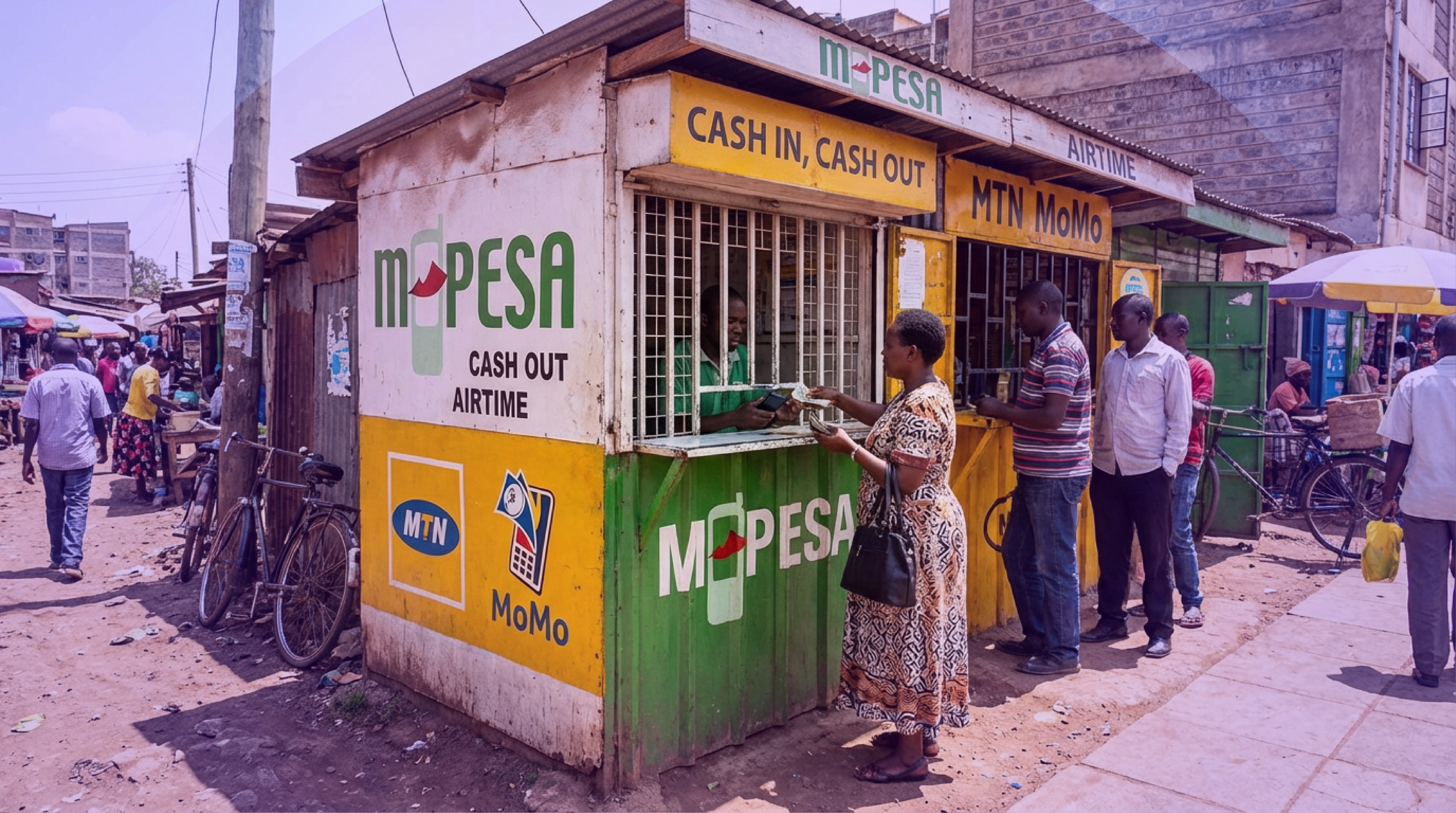
The picture is AI generated
As one scholar advises, ‘historical analysis promotes not only an understanding of the trajectory of ecosystems but also foresight for future development and how ecosystems actors' interactions change through time to co-create an environment for fintech.’
Throughout the history of fintech – often traced from 1886, with the completion of the transatlantic telegraph cable between Europe and America, to 1967, when Barclays Bank launched the first ATM, and up to the eve of the 2008 global financial crisis (see box) – traditional banking remained largely inaccessible to much of Africa’s population, particularly in rural areas.
This changed with the launch of M-Pesa in Kenya in 2007. The technology was quickly adopted by MTN Mobile Money and Airtel Money and others around Africa, revolutionising the sector by allowing users to send, receive, and store money via basic mobile phones.
This ‘leapfrog effect’ bypassed traditional banking infrastructure, establishing Africa as mobile-first market that utilised USSD technology on basic feature phones before the advent of smartphones and fintech apps in the 2010s.
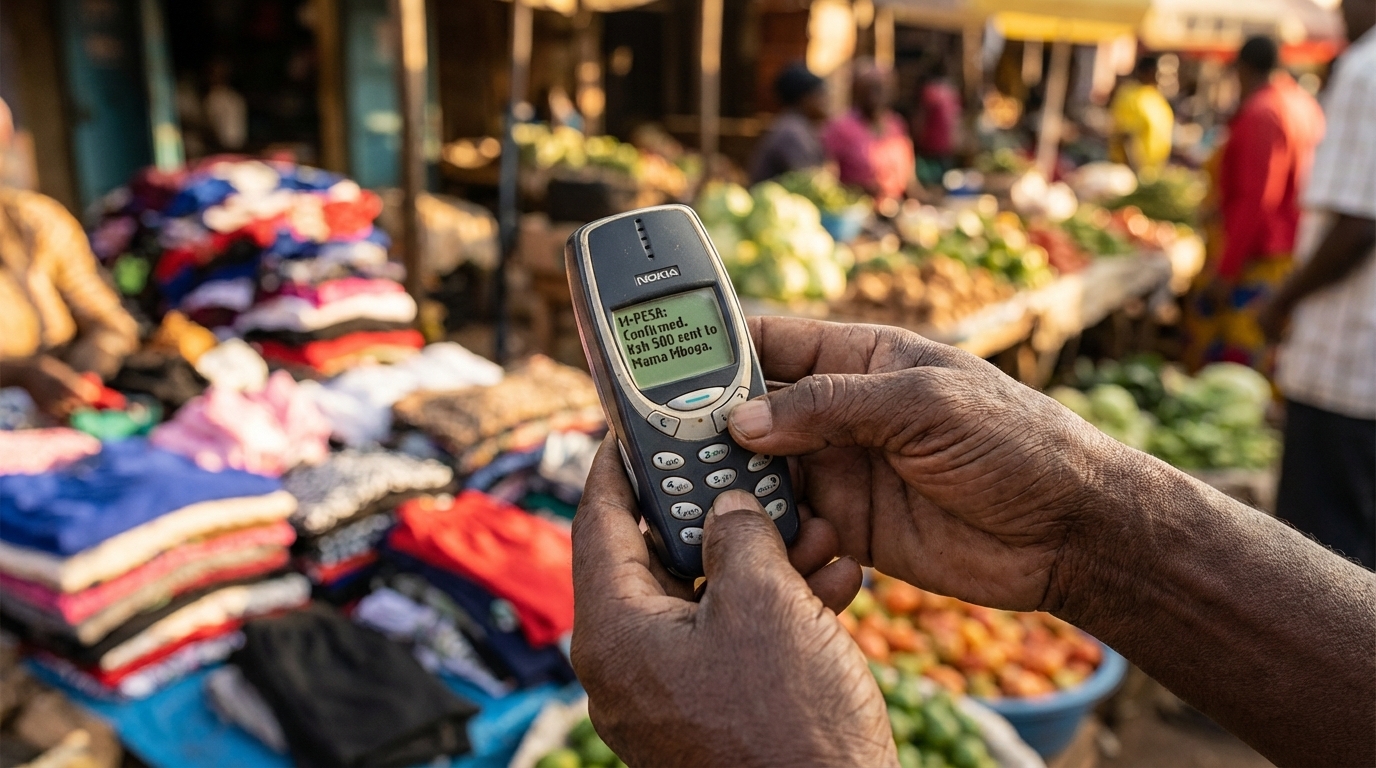
The picture is AI generated
Today, Africa drives the growth of the global mobile money industry. Of the 2 billion registered mobile money accounts in 2024, more than two-thirds were in Sub-Saharan Africa (SSA), according to the 2025 industry report by the GSMA, a trade organisation representing mobile network operators globally.
With over one billion registered accounts in 2024, SSA doubled its 2020 figures. The region maintained its status as the world’s largest mobile money market, hosting 165 live services, or 49% of the 336 operating globally.
This goes to show how mobile money continues to play an increasingly critical role in the region’s economy. The sector’s contribution to the SSA’s gross domestic product (GDP) rose from approximately US$150 billion in 2022 to US$190 billion in 2023.
Despite these accomplishments, hurdles remain. Fraud is a persistent concern, while low levels of digital and financial literacy among users further complicate efforts to reach the 300 million Africans who remain unbanked or underbanked.
The more important question, however, given the foregoing, is what lessons can be gleaned from the fintech accomplishments thus far to bridge the gap.
A Mackinsey & Company analysis shows that the most successful African tech startups share six characteristics.
First, fintechs must match their value proposition to specific local markets. Leaders like Fawry (Egypt), M-Pesa (Kenya), and Interswitch (Nigeria) succeeded by building infrastructure tailored to their home countries and are now the market leaders as a result.
Second, to achieve sustainable growth, companies that have a long history of operating on the continent have built their success on rapid customer acquisition.

The picture is AI generated
Third, once having acquired customers, leading fintechs have found a sustainable way to translate this into clear monetisation strategies. For example, Rwanda’s MTN has integrated a lending component in addition to its wallets, while Nigeria’s Paga has leveraged its strong position in wallets to expand into merchant acquiring.
Fourth, a key marker of success in Africa has been the ability to adapt to the reality of low average revenue per user (ARPU), both in the consumer and micro, small, and medium-sized enterprises sectors. Companies like South Africa’s Yoco use ‘pay-as-you-go’ models to service businesses that cannot afford upfront payments.
Fifth, with 90 percent of all transactions on the continent still cash based, successful fintechs have had to find ways to reach clients offline by building agent networks or using pre-existing infrastructure such as physical shops for delivery of financial services.
Finally, with regulators increasingly active in Africa, fintechs are required to pay attention to and comply with regulation. Many successful fintechs have, after reaching significant scale, chosen to proactively engage with regulatory stakeholders so that they are able to move forward together.
|
THE HISTORY OF FINTECH FINTECH 1.0 (1886-1967) – INFRASTRUCTURE This era started with technologies such as the telegraph, railroads and steamships that allowed for the first time, rapid transmission of financial information across borders. Key events in this period included:
FINTECH 2.0 (1967-2008) – FINANCIAL INSTITUTIONS The second Fintech era marks the shift from analog to digital and was led by traditional financial institutions. The launch of the first handheld calculator and first ATM installed by Barclays bank marked the beginning of the period in 1967.
FINTECH 3.0 (2008-CURRENT) – START-UPS The Global Financial Crisis in 2008 caused significant public distrust of the traditional banking system. This led to the emergence of new companies seeking to disrupt and upend the market position of existing financial institutions.
FINTECH 3.5 - FINTECH IN EMERGING MARKETS The use of smartphones has signalled a change in consumer behaviour with internet access being the main division between consumers in developed and developing markets. As such, Fintech 3.5 can be used to explain fintech developments across developing countries, including in Africa. |
END
Source: United Nations Economist Network, 2023
