


Africa is not catching up, Africa is building
In March 2026, the global conversation on inclusive finance will be happening in Kigali, Rwanda at the Inclusive FinTech Forum (IFF 2026), where Africa’s policy priorities, innovation realities, and cross-border ambitions take centre stage.
Africa is not “catching up.” Africa is building, with instant payments, mobile money, and digital rails that many markets are still trying to figure out. The continent is not just adopting the future of finance, it is actively shaping it. Across multiple markets, Africa has built some of the world’s most widely used mobile money ecosystems, expanded real-time payments at scale, and demonstrated how digital rails can deliver inclusion faster than traditional banking models ever could.
Yet the next phase of Africa’s financial transformation will not be defined by technology alone. It will be defined by a new set of policy questions, questions that sit at the intersection of sovereignty, competitiveness, resilience, and trust.
- How do we connect African payment systems across borders?
- How do we govern AI so it expands access rather than deepens exclusion?
- How do we build open finance ecosystems that are trusted, interoperable, and globally investable?
- How do we mobilise capital at scale for Africa’s climate and adaptation priorities?
These questions form the backbone of the policy conversations that will define Inclusive FinTech Forum 2026.
Theme 1: Building Africa’s Digital Currency Corridor - From CBDCs to Cross-Border Commerce
Africa is already one of the most active regions globally in exploring new forms of digital money, from CBDCs to stablecoins, tokenised deposits, and faster cross-border settlement models. But while innovation is accelerating, fragmentation remains a central constraint. Many African countries still face high remittance costs, slow settlement, and limited interoperability between national payment systems, even across neighbouring markets. 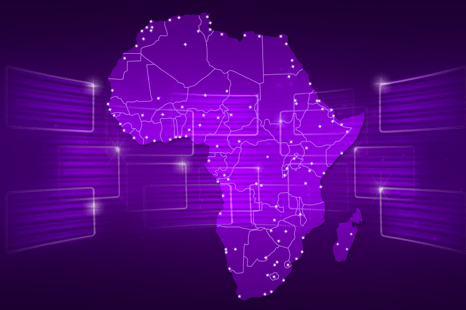
The policy challenge is therefore no longer whether digital currency models are viable. The challenge is how to move from pilots to scalable corridors that reduce costs and unlock trade, without undermining monetary sovereignty, financial stability, or consumer protection.
This theme will inevitably raise critical regulatory questions, bearing in mind that a digital currency corridor is ultimately not just a technology project, it is a regional coordination project. It requires policy alignment, shared standards, and trust between jurisdictions.
Theme 2: AI-Powered Financial Inclusion - Scaling Smart Solutions Across Emerging Markets
AI is rapidly becoming embedded across the financial sector, including in credit decisioning, fraud detection, customer onboarding, and financial product design. In emerging markets, the promise is significant: AI can reduce the cost of serving low-income customers, improve risk models for thin-file borrowers, and enable faster, more responsive service delivery.
.png?width=466&height=311&name=Africa%20is%20Not%20Catching%20Up%2c%20Africa%20is%20Building_5%20(1).png) However, the inclusion upside is not automatic. Without strong governance, AI can scale exclusion just as efficiently as it scales access. Algorithmic bias, opaque decisioning, weak explainability, and poor-quality data can lead to unfair biased outcomes, especially for women, informal workers, and rural communities.
However, the inclusion upside is not automatic. Without strong governance, AI can scale exclusion just as efficiently as it scales access. Algorithmic bias, opaque decisioning, weak explainability, and poor-quality data can lead to unfair biased outcomes, especially for women, informal workers, and rural communities.
This is why the policy conversation matters. Regulators and innovators must work together to ensure that AI is deployed responsibly, while protecting consumers, strengthening trust, and avoiding new forms of exclusion. This includes questions of transparency, accountability, auditibility, and the ability for consumers to challenge automated decisions.
AI policy is also becoming a competitiveness issue. Countries that establish clear, credible guardrails, without stifling innovation will be better positioned to attract investment, scale local solutions, and build public trust.
Theme 3: Open Finance Ecosystems - Connecting Africa’s FinTech Future to Global Markets
Open finance is increasingly becoming a foundation for modern financial ecosystems. At its core, it is about enabling secure, regulated data-sharing between financial institutions and third parties, creating competition, improving consumer choice, and accelerating innovation.
For Africa, the open finance agenda is about more than digitisation. It is about building trusted systems that can support SME growth, improve access to credit, and connect African fintech markets to global capital and partners. Done well, open finance can lower barriers to entry for innovators, strengthen consumer portability, and expand the number of financial products available to underserved segments.
But open finance also introduces new policy responsibilities. It requires strong data governance, consumer consent frameworks, cybersecurity standards, and liability models. Regulators must decide how to balance market-led innovation with the need for interoperability and trust. They must also ensure that open finance does not become an elite tool that benefits only the already-banked, while leaving informal economies behind.
The long-term opportunity is clear: open finance can help create an Africa-wide digital financial ecosystem that is not fragmented, but connected, competitive, and globally investable.
Theme 4: Climate FinTech - Financing Africa’s Green Future
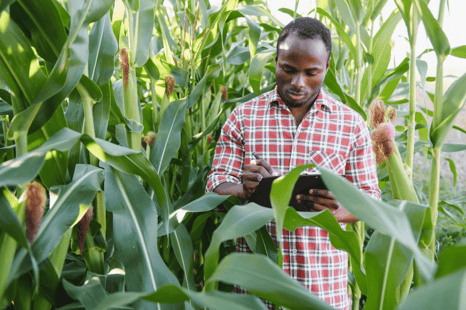 Africa faces one of the world’s largest climate adaptation gaps, and one of the biggest opportunities to leapfrog into resilient, low-carbon growth. Yet climate finance remains one of the most difficult areas to scale, particularly for SMEs, farmers, and households who face the greatest climate vulnerability.
Climate fintech offers a pathway to bridge this gap. From parametric insurance and climate risk analytics, to green lending, nature-based finance, and digitised carbon markets, fintech innovation can help channel capital to where it is needed most, and do so with greater transparency and efficiency.
However, climate fintech is not only a product challenge. It is a policy and market-structure challenge. Regulators and DFIs must address the credibility of climate data, the integrity of carbon and nature markets, and the risk of greenwashing. Financial authorities must also consider how climate risk is incorporated into supervision, lending standards, and long-term financial stability.
Most importantly, climate finance in Africa cannot be designed only for large corporates. If climate fintech is to deliver real resilience, it must include smallholder farmers, informal enterprises, and SMEs, and this will require blended finance, risk-sharing, and public-private collaboration at scale.
Why These Conversations Matter for African Countries
These policy conversations matter because they directly shape African countries’ ability to reduce the cost of cross-border trade and remittances, unlock SME growth and regional commerce, strengthen financial integrity and consumer protection, mobilise capital into Africa’s digital economy, finance climate resilience and adaptation, and compete globally, not as fragmented markets, but as a connected ecosystem.
In practical terms, these themes are not abstract. They determine whether an SME in Kigali can sell across borders without payment friction, whether a young entrepreneur in Lagos can access affordable credit without discriminatory AI decisioning, whether a small business in Nairobi can securely share its financial data to access better services, and whether a farmer in Ghana can access insurance that pays out when climate shocks hit.
Conclusion: From Dialogue to Implementation:
IFF 2026 is not simply a convening about “the future.” It is a forum about implementation, about building the infrastructure, governance, and partnerships that make inclusion scalable and sustainable.
Africa’s future in finance will be defined by the ability to align policy with innovation, and national priorities with regional cooperation. The future of inclusive finance will be shaped by those who can build trust, coordination, and shared infrastructure across markets. IFF 2026 is where that work begins.
Raadhika Sihin
Head of Public Policy, GFTN